Product categories
Whitening Serum Manufacturer Thailand: A Brand Owner's Guide
Choosing a whitening serum manufacturer in Thailand is less about finding the strongest formula and more about matching actives, claims and paperwork to the market you plan to sell

Choosing a whitening serum manufacturer in Thailand is less about finding the strongest formula and more about matching actives, claims and paperwork to the market you plan to sell in. This guide explains what to decide before you approach a factory, how to compare options, and what to verify before you approve a production run.
Start With Market and Claim, Not the Ingredient List
Before you contact any manufacturer, define where the serum will be sold and what you intend to say about it. The word 'whitening' itself is treated differently across markets. Some retailers and regulators prefer terms such as 'brightening', 'even-looking skin tone' or 'radiance', and wording that sounds acceptable in one market may create problems in another.
Answer these questions in your project brief:
- **Which countries will you launch in first?** Your target market shapes allowable ingredients, concentrations, label language and registration steps.
- **What is your claim position?** Consider cosmetic-appropriate language about appearance rather than anything suggesting a medical effect.
- **Who is your customer?** Skin concerns, climate and price expectations will influence your texture and actives.
- **Where will it sell?** Clinics, online stores and retail chains may each require a different presentation.
This order matters because a formula that has already been developed around one claim can be costly to rework later. A competent manufacturer should ask about your target market early. If nobody does, raise it yourself.
Regulatory references in this guide are general. Check the current requirements with the Thai FDA, the authority in your destination market and a qualified regulatory consultant before you commit to a formula or artwork.
Understanding Actives, Stability and Formula Trade-Offs
A serum is a concentrated format, so its active system deserves close attention. Brand owners often ask for the 'most effective' formula, but the useful conversation concerns how each active behaves in the finished product and how it fits your market.
Actives commonly discussed in brightening skincare include niacinamide, vitamin C and its derivatives, alpha arbutin and tranexamic acid. Each comes with trade-offs:
- **Vitamin C** can be attractive to consumers, but some forms are sensitive to light, air and pH, which influences both packaging and shelf life.
- **Niacinamide** is widely used and familiar, although higher levels may not suit every skin type.
- **Alpha arbutin and tranexamic acid** are popular, but permitted use and claims should be checked by market.
- **Hydroquinone and similar restricted substances** are regulated in many markets. Treat any suggestion of using them, or an unexplained 'strong results' promise, as a reason to ask hard questions.
Ask the lab to explain how the active level was chosen, what tolerance considerations apply and which tests support the formula. Sensorial details matter too. A serum for humid climates may need a lighter feel, and it should layer well under sunscreen.
Finally, plan your messaging around sunscreen use, since brightening routines generally call for daytime sun protection. Include that advice in your product education.
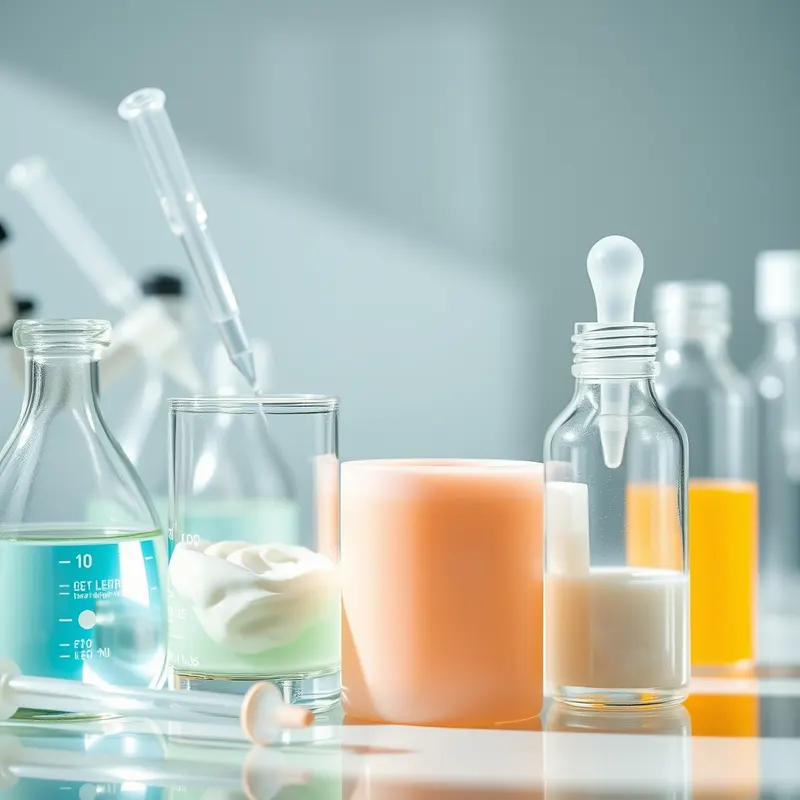
OEM, ODM or Custom: Choosing Your Development Route
Thai OEM/ODM factories usually offer several ways to reach a finished serum. The right choice depends on how much differentiation you need and how much time and budget you can give to development.
- **ODM (existing base formula).** You choose from a developed formula and adjust elements such as fragrance or the highlighted active. This route is the most direct and suits first launches. The trade-off is that similar bases may appear in other brands.
- **OEM (your specification).** You provide a brief or a formula, and the factory produces to that specification. Better control, though you carry more responsibility for the concept.
- **Full custom development.** You and the lab develop something new. This offers the strongest differentiation, but it requires more iterations, testing and patience.
When planning your order, use the standard of 1,000 units per SKU as your starting point. Launching one or two focused serums is usually easier to manage than spreading the same budget across a complete line.
Also ask who owns the formula. In an ODM arrangement, you may not own the base formula, which matters if you later want to change manufacturer. Skincare OEM agreements should state ownership, confidentiality and what happens to your formula data if the relationship ends. An experienced adviser can review these terms before you sign.
How to Vet a Whitening Serum Manufacturer in Thailand
A polished sales deck tells you little about what actually happens on the production floor. Assess each OEM manufacturer in Thailand against the same criteria so you can compare them fairly.
Use this checklist in your discussions:
- **Legal and licensing basics.** Confirm the registered company and the entity that will hold relevant paperwork. Verify anything important against official records.
- **Quality systems.** Ask which GMP or ISO standards apply to the specific site making your product, and request current certificates to review.
- **Serum experience.** Ask whether they routinely produce serums with your target active system and how they manage low-viscosity filling.
- **Testing capability.** Which stability and safety tests are performed in-house, and which go to outside laboratories?
- **Export readiness.** Can they supply the documents your destination market needs for this particular product?
- **Communication.** Do they respond clearly and raise problems early during sampling?
A good sign is a manufacturer that asks detailed questions and tells you when your claim or concept may be unrealistic. A warning sign is someone who agrees to everything right away.
You can compare several routes, including direct factories, B2B directories and one-point management partners such as 5FINE. Each suits a different level of in-house experience, so look at the responsibilities each party actually takes on.
Packaging, Sampling and Label Decisions
For a brightening serum, packaging is part of the formula's protection rather than just decoration. Decide it alongside the formula, not after it.
Common options include dropper bottles, which feel familiar to serum users but expose the product to air each time they open; airless pumps, which reduce air contact and make dosing simple; and tinted or opaque containers, which help with light sensitivity. Discuss cosmetic bottles and pumps with the lab early, because compatibility testing should use your actual packaging, not a substitute.
Review samples in a structured way:
- **Texture and absorption** on the skin of people in your target group.
- **Layering** with moisturizer and sunscreen, especially to see whether pilling occurs.
- **Colour and scent changes** after the sample has been stored for a while. Discoloration can be a key concern with some actives.
- **Dispensing** to confirm that the serum flows properly and that the pump or dropper is reliable.
Change only one or two things in each sampling round and keep a record of the results. Your label also requires careful attention. Ingredient lists, directions, warnings and claim wording all need checking against target-market rules, and translating them may affect how much label space you require. Approve your final artwork only after the formula and claims are settled, as reprinting can be an unnecessary cost.
From Quotation to First Production Run
Lead times and pricing vary, so do not rely on a single number from early conversations. What you need to understand is what determines them: formula complexity, availability of actives, packaging sourcing, testing requirements, registration steps, order size and the factory's current schedule. Timing should be confirmed when you receive the quotation.
When comparing quotes, make sure each one states:
- **Formula and sampling:** how many rounds are included and what happens if you need more.
- **Packaging:** whether components are included, and who is responsible for sourcing them.
- **Testing and documents:** which tests are covered and what costs extra.
- **Commercial terms:** order quantity, payment milestones, shipping terms and validity period.
Before production, agree on an approved reference sample, written specifications, quality acceptance criteria and a process for dealing with non-conforming goods. Ask for batch records or a certificate of analysis as appropriate to your agreement.
A sensible rollout starts with a focused launch, then uses customer feedback and sales data to guide the next batch. If this is your first serum and you are still working out how to start your own brand, build your budget around development and marketing as well as manufacturing. A good formula still needs proper positioning, content and distribution to find its customers.
Need expert support?
Leave your details and our team will get back to you.
FAQ
Frequently asked questions
What is the MOQ for whitening serum manufacturing in Thailand?
Use the standard of 1,000 units per SKU when planning. Remember that packaging components and printed materials also have their own supply considerations, so ask your manufacturer to explain how those affect the total project before you finalize your launch budget.
Can I advertise my serum as whitening?
That depends on the market, the formula and local advertising rules. Many brands use appearance-focused words like brightening or radiance instead. Check the wording with a regulatory consultant and your target market's authority before printing labels or running advertising campaigns.
Is it better to use an existing formula or develop a new one?
An existing formula generally suits a first launch because it reduces development work and lets you test market demand. Custom development makes sense when your differentiation truly depends on the formula and you have the budget and patience for several rounds of testing.
Which documents should I ask a manufacturer for?
Ask for company registration details, relevant GMP or ISO certificates for the production site, ingredient information, specifications and test reports appropriate to your product. Requirements vary by destination, so confirm the required list with your local authority or customs and regulatory adviser.
Prepared by the OEM Thailand team for informational purposes. Some links may lead to referred partners.
Articles
Related articles
Lip Care OEM Thailand: What Brand Owners Decide First
A lip care OEM Thailand project looks simple from the outside — a balm in a stick, a tint in a tube. The decisions underneath it are anything but.
Body Care OEM Thailand: A Buyer's Guide to Building Your Own Line
Body care is one of the broadest categories a brand owner can commission in Thailand — lotions, body washes, scrubs, oils, balms and butters all fall under it, each with different

Probiotic Supplement Manufacturer in Thailand: A Practical Guide for Brand Owners
Probiotics are one of the fastest-moving categories in the supplement world, but they are also one of the trickiest to manufacture well. Live strains, stability, capsule technology
Sunscreen OEM Thailand: What Brand Owners Must Decide First
Sunscreen is the product category where the gap between a good brief and a vague one shows up most clearly.
Acne Treatment Product Manufacturer Thailand: A Buyer's Guide
Choosing an acne treatment product manufacturer in Thailand means answering a question most skincare projects can postpone: is your product a cosmetic or a drug in the markets wher
Baby Skincare OEM Thailand: What Brand Owners Must Decide First
Baby skincare is the category where a brand owner's instinct to move fast collides hardest with the manufacturer's instinct to slow down, and the manufacturer is right. If you are