OEM & ODM basics
Private Label vs. OEM Manufacturer: What's the Real Difference?
If you're planning to launch a skincare, supplement or fragrance line, you've likely seen "private label" and "OEM" used almost interchangeably — and that's where confusion starts.

If you're planning to launch a skincare, supplement or fragrance line, you've likely seen "private label" and "OEM" used almost interchangeably — and that's where confusion starts. Understanding the difference between private label and OEM manufacturer models isn't academic: it determines how much control you have over your formula, how defensible your brand is against copycats, and what kind of partner you should be looking for. This guide breaks down both models in plain terms, so you can decide which one actually fits your business goals before you start contacting factories.
Private label: buying into an existing formula
Private label manufacturing means a factory already has a finished formula — a cream, a serum, a balm, a capsule — sitting in its catalog, ready to be rebranded. You choose from what's available, apply your own packaging and labeling, and the product goes to market under your name. The appeal is straightforward: faster decision-making, no formulation work on your end, and often a lower barrier to entry for a first product. The trade-off is that you don't own the formula, and in many cases your competitors can buy the exact same product from the same catalog with a different label. If brand differentiation matters to you long-term, this is worth thinking through early.
OEM: building a formula around your brand
OEM (Original Equipment Manufacturer) is a different relationship. Here, you work with the manufacturer to develop — or substantially customize — a formula specifically for your brand: adjusting actives, texture, scent, concentration, or packaging format to match a brief you provide. An OEM manufacturer in Thailand typically has in-house R&D or formulation chemists who turn your brief into something tested and sampled before it's locked for production. This gives you more control and, usually, more defensibility — but it also means more upfront decisions on your side: what the product should do, who it's for, and what claims you want to make.

Where the lines blur in practice
In reality, many factories offer both models, and some projects sit somewhere in between — starting from a base formula (private label) but customizing the fragrance, color, or active percentage (a lighter version of OEM). This hybrid approach is common in beauty and cosmetics manufacturing, where a base cream or serum can be adjusted without a full formulation project. ODM (Original Design Manufacturer) is a related term worth knowing too — it usually refers to the manufacturer designing the full product concept, including packaging, based on market trends, which you then brand and sell. Asking a potential partner directly which model they're proposing — and what exactly is customizable versus fixed — avoids surprises later.
How the choice plays out across product categories
The private label vs. OEM decision looks different depending on what you're making. For health supplement OEM projects, formulation control matters more, since dosage, ingredient sourcing and label claims are closely tied to the product's function and to regulatory review. For herbal balm OEM products, many brands start from an existing base formula and customize scent or packaging, since the core formulation (menthol, camphor, herbal oils) is often fairly standardized across the category. In cosmetics and skincare, the range is wider — from fully private label serums to fully custom formulas built around a specific active ingredient or claim. Mapping your category to the right model early saves time in supplier conversations.
Questions to ask before you commit to either model
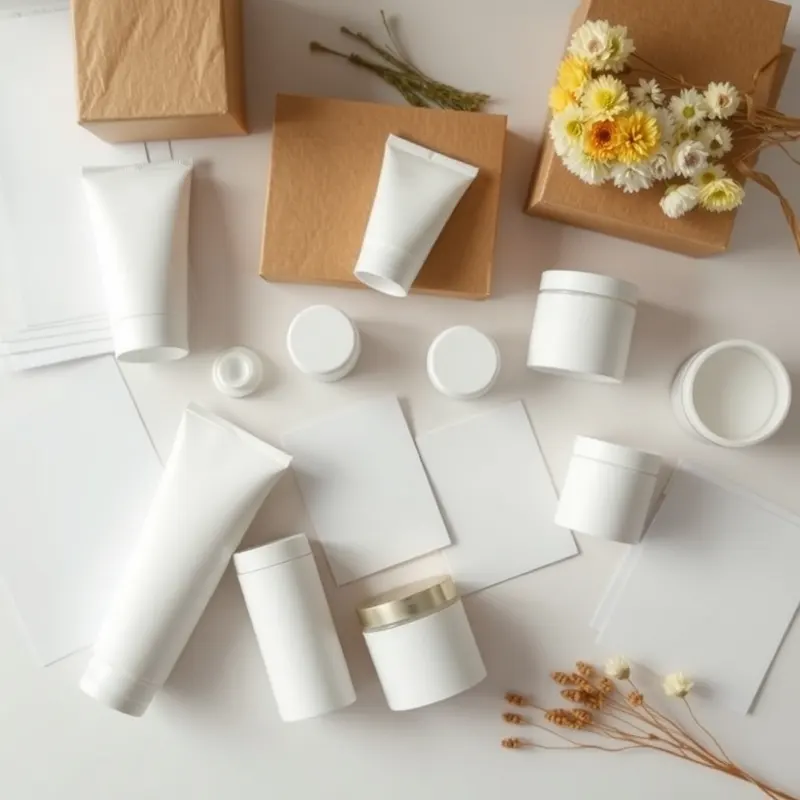
Before signing on with a private label catalog or starting an OEM project, it helps to get clear answers on a few things: Can the formula be adjusted at all, or is it fixed as-is? Who owns the formula if you later want to switch manufacturers? What documentation is provided with the product — for products with existing certification, this is typically shared per item at the time of ordering. What's the standard order quantity — for OEM work, a 1,000 units per SKU minimum is common across the industry, though actual quantities and costs depend on the product and will be clarified during the quote stage. Asking these questions upfront, rather than assuming, is what separates a smooth project from a frustrating one.
Matching the model to your brand stage
Early-stage brands testing a market often lean toward private label because it reduces upfront formulation work and lets them validate demand faster. Brands with a clear positioning, a specific ingredient story, or plans to scale usually move toward OEM, since it protects what makes the product distinct. Platforms like 5FINE work across both approaches depending on the product category, which is a useful reminder that the 'right' model isn't fixed — it should follow your brand's stage and goals, not the other way around.
Need expert support?
Leave your details and our team will get back to you.
FAQ
Frequently asked questions
Is private label cheaper than OEM?
Private label generally involves less upfront formulation work since the product already exists, which can make the process faster and simpler to budget for. OEM involves more development time due to formulation and sampling. Actual costs vary by product and quantity and are confirmed during the quotation stage with your manufacturer.
Can I switch from private label to OEM later?
Yes, many brands start with a private label product to enter the market, then move to a custom OEM formula once they have clearer data on what customers want. This is a common growth path rather than an exception.
Does OEM always mean a higher minimum order quantity?
Not necessarily higher, but OEM projects typically follow the same standard MOQ as private label in many factories — around 1,000 units per SKU. The bigger difference is the development time and formulation involvement, not the quantity itself.
How do I know if a factory offers true OEM or just private label with minor tweaks?
Ask directly whether they have in-house formulation chemists, whether they can adjust active ingredient percentages, and whether they provide stability or compatibility testing on custom formulas. A genuine OEM manufacturer in Thailand should be able to walk you through their formulation process step by step.
Prepared by the OEM Thailand team for informational purposes. Some links may lead to referred partners.
Articles
Related articles
What ODM Skincare Includes: A Brand Owner's Guide to the Full Package
If you're comparing contract manufacturing routes for a new skincare, supplement or fragrance line, you've probably run into the term ODM and wondered exactly what's inside it vers
Small Batch Cosmetic Manufacturer Thailand: What Buyers Decide
Looking for a small batch cosmetic manufacturer in Thailand usually means one of three different things. Knowing which one you mean changes who you should be talking to.

Best Country to Manufacture Skincare in Asia: How to Decide
There is no single best country - there is a best fit for your product, market and budget. The five criteria that decide it, what each hub is known for, and a decision process.

OEM Manufacturing in Thailand: A Practical Guide for Brand Owners
If you're exploring how to start your own brand of skincare, cosmetics, supplements or fragrance without building a factory, Thailand is one of the more established places to look.
ODM Skincare Thailand: How It Works and When to Choose It Over OEM
If you're exploring how to start your own brand in skincare without building a lab from scratch, you've likely come across two acronyms that get used loosely and often incorrectly:

OEM vs ODM Cosmetics: What's the Real Difference for Brand Owners?
If you're trying to start your own brand in skincare, cosmetics, supplements or fragrance, you've probably run into the terms OEM and ODM and found that most explanations are eithe