Guide
Beauty Formulation Explained: What Goes Into a Cosmetic Formula
Beauty formulation is where a product idea becomes a stable, safe, sellable product. Here is what a cosmetic formula contains, how it is built and the decisions you own.
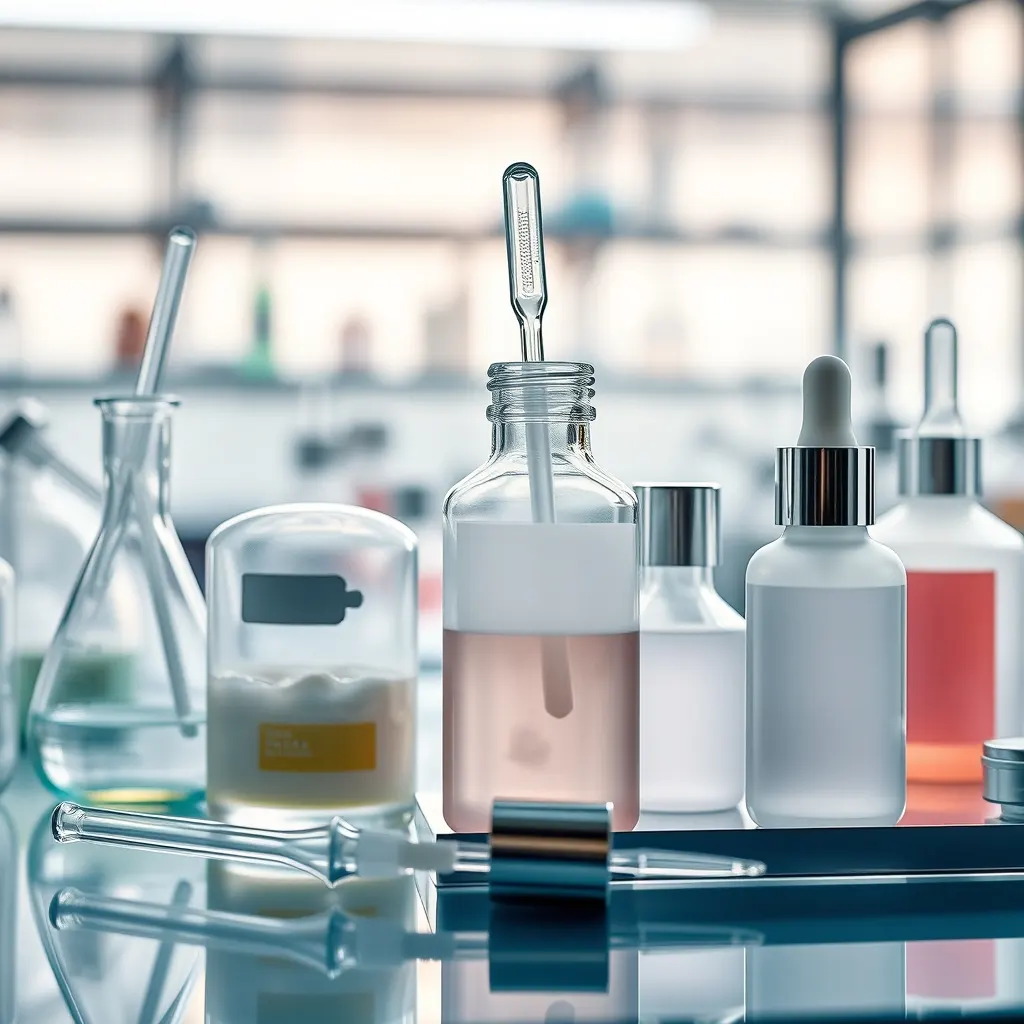
Beauty formulation is the discipline that turns a product idea, such as a lightweight serum for humid climates or a rich night cream for mature skin, into a stable, safe and repeatable formula that a factory can produce batch after batch. Most brand owners never see this work directly; they see samples arrive and approve or reject them. Yet the quality of a brief, and the decisions made during formulation, shape everything from texture and shelf life to what claims you may legally make. This guide explains what a cosmetic formula is made of, how chemists build one, which tests matter and where the brand owner's decisions sit in the process.
The anatomy of a cosmetic formula
Open any ingredient list and you are looking at a formula expressed in descending order of concentration. Behind that list sits a structure that chemists use regardless of product type. Understanding it helps you read samples and ask sharper questions.
- **Base (the majority of the formula).** Water, oils, esters, butters and silicones, together with the emulsifier that holds oil and water together and the thickener that sets viscosity. The base determines texture, spreadability, absorption and how the product feels after thirty minutes.
- **Active ingredients.** The components tied to the product's purpose: niacinamide, vitamin C derivatives, peptides, hyaluronic acid, plant extracts, UV filters in sunscreen. They are usually a small fraction of the formula by weight but a large fraction of its cost and marketing story.
- **Functional ingredients.** Preservatives, antioxidants, chelating agents, pH adjusters and solubilisers. Invisible to the consumer, essential to safety and shelf life.
- **Sensory and aesthetic ingredients.** Fragrance, colourants, pearlisers and film formers that shape the experience and look.
A useful mental model: the base is the vehicle, the actives are the passengers, the functional ingredients are the seatbelts and the sensory ingredients are the paint. First-time brand owners tend to talk only about the passengers. Experienced ones ask about the vehicle first, because an active in the wrong base either does not penetrate, destabilises or irritates. When you compare quotations from any OEM manufacturer in Thailand, ask which base system the sample uses and why it was chosen for your product and climate.
Formula types and the textures they produce
The second decision in beauty formulation is the physical form of the product, which is fixed before any active is chosen. Each form has strengths, limits and packaging implications.
- **Aqueous solutions (toners, essences, mists):** light, fast-absorbing, ideal for water-soluble actives. They contain a lot of water, so preservation must be robust.
- **Gels:** water-based with a gelling polymer. Cooling and non-greasy, popular in hot and humid markets. Limited capacity for oil-soluble actives.
- **Oil-in-water emulsions (lotions, light creams):** the workhorse of skincare. Flexible, carries both water- and oil-soluble ingredients, adjustable from fluid to rich.
- **Water-in-oil emulsions and anhydrous balms:** occlusive and nourishing, suited to dry skin, night products and cold climates. Heavier feel.
- **Serums:** a marketing term rather than a chemical one; a serum can be a solution, a gel or a light emulsion carrying a concentrated active.
- **Sunscreens:** emulsions or gels carrying UV filters, with their own testing regime and regulatory rules.
The form shapes packaging directly. Low-viscosity solutions need a dropper or a pump with a fine orifice; thick creams suit jars or wide tubes; air-sensitive formulas with vitamin C or retinoids benefit from airless systems. Decide the form, then discuss cosmetic bottles and pumps with the manufacturer or Thai packaging suppliers while the lab works, rather than afterwards. A sample approved in a lab beaker can behave differently once it has to pass through a pump every morning for six months.
From brief to bench: how a formula is actually built
Formula development follows a sequence that is fairly consistent across laboratories, whether you work with a skincare OEM, an independent formulator or an in-house chemist. Knowing it helps you time your feedback and budget your patience.
1. **Brief.** You define the target user, skin concern, form, texture, scent, hero ingredients, target market and price tier. The chemist will also ask what you do not want (for example alcohol, fragrance or specific preservatives), because exclusions narrow the ingredient palette. 2. **Literature and palette selection.** The chemist reviews supplier data for candidate ingredients: recommended use levels, solubility, pH range, compatibility and available documentation. 3. **Bench trials.** Small batches are made at lab scale. Several versions are typically prepared, varying base, active levels or sensory profile. 4. **Sample review.** You test on skin over days or weeks, ideally in the climate where you will sell. Feedback should be specific: too tacky after ten minutes, pills under sunscreen, scent fades too fast. 5. **Iteration.** The chemist adjusts and resubmits. Two to four rounds are common; more usually means the brief was unclear. 6. **Stability and safety testing.** The chosen formula goes through the tests described in the next section. 7. **Scale-up.** The lab formula is transferred to production equipment, where mixing order, heating and cooling rates are set so a 1,000-unit batch behaves like the 200-gram beaker.
Timelines depend on the number of rounds, ingredient lead times and the tests your market requires, so they are confirmed at quotation rather than promised up front. The single biggest accelerator is a precise brief with a clear decision-maker on your side.
Stability, preservation and the tests that protect your brand
A formula that looks perfect on day one is not finished until it has been shown to stay that way through its intended shelf life, in transit and on a bathroom shelf. This is where beauty formulation moves from craft to science.
- **Stability testing.** Samples are stored at elevated temperature, at low temperature, through freeze-thaw cycles and under light. The chemist checks colour, odour, pH, viscosity, separation and the integrity of actives at set intervals. Accelerated conditions are used to predict longer shelf life.
- **Preservative efficacy (challenge) testing.** The formula is deliberately inoculated with microorganisms to confirm the preservative system controls them. Any formula containing water needs this, including natural and clean positioned products.
- **Microbial limits.** Finished batches are tested for microbial counts and specified organisms before release.
- **Packaging compatibility.** The formula is stored in the actual bottle, pump or tube to catch interactions such as cracking, pump clogging, ingredient migration or loss of fragrance.
- **Safety assessment and, where required, patch or in-use testing.** Depending on destination market rules, a safety assessment of the ingredients at their use levels and sometimes human patch testing are needed.
Ask your manufacturer which tests are included in your project, which are optional, and what documentation you will receive per item. Be wary of any partner who treats these as unnecessary extras; a recall caused by separation or microbial growth costs far more than the testing. These results also feed directly into the product information file that many markets require.
Ingredients, regulations and the claims you can make
Formulation and regulation are inseparable. Every market maintains lists of prohibited ingredients, restricted ingredients with maximum concentrations, permitted colourants, permitted preservatives and permitted UV filters. Thailand follows the ASEAN Cosmetic Directive framework, and other regions have their own schedules. The chemist works within the rules of your target market, which is why stating the market in the brief is not optional.
Three practical points for brand owners:
- **Check restricted ingredients early.** A whitening agent allowed at one level in one market may be restricted elsewhere. Confirm with the relevant authority or a regulatory consultant before the formula is locked.
- **Claims drive formulation, and formulation limits claims.** If you want to say reduces the appearance of fine lines, the formula needs actives with supporting data at relevant levels, and the wording must stay within what cosmetics may claim. Medical-sounding promises move a product into a different regulatory category.
- **Documentation is part of the formula.** Each ingredient should come with technical data and a certificate of analysis, and the finished product with test reports. These are provided per item when you order and form the basis of registration or notification in your market, which is usually the brand owner's responsibility.
This is also where the standard minimum order quantity of 1,000 units per SKU becomes relevant: testing, documentation and scale-up are done per formula, so spreading the effort over a reasonable batch is what keeps unit economics workable. Launching one well-tested hero product is usually wiser than three under-tested ones.
Working with an OEM on beauty formulation: your decisions and theirs
The division of labour between a brand owner and a manufacturer is clearer than it first appears. Your decisions set direction; the laboratory's decisions make it work. Knowing which is which keeps projects moving.
**Decisions that belong to you:**
- Target customer, skin concern and market.
- Product form, texture preference and sensory profile.
- Hero ingredients and ingredient exclusions.
- Packaging format and price tier.
- Number of SKUs for the first run.
- Claims you intend to make, checked against your market's rules.
**Decisions that belong to the chemist:**
- Base system, emulsifier and thickener selection.
- Use levels of actives within supplier and regulatory limits.
- Preservative system and antioxidant protection.
- Processing order, temperatures and scale-up parameters.
There are three ways to engage. With a ready formula (ODM), you adopt a formula the manufacturer already has and adjust it lightly; it is fastest and lowest risk. With production to your specification (OEM), you bring a formula or a detailed spec. With full custom development, you co-create from scratch. Managed-production partners such as 5FINE, which run projects through partner GMP factories rather than owning a single plant, typically offer all three routes alongside packaging, documentation and export support, which suits brand owners who want one point of contact. Independent labs and single factories suit brands with their own chemist or packaging team. Whichever route you choose, write a one-page brief, nominate one decision-maker, give specific feedback on samples and ask for the test and documentation plan before you approve the final formula.
Need expert support?
Leave your details and our team will get back to you.
FAQ
Frequently asked questions
What is the difference between a formula and an ingredient list?
The ingredient list (INCI) shows what is in the product in descending order of concentration but not the exact percentages, processing method or supplier grades. The formula is the full recipe with precise percentages and manufacturing instructions. Ownership of that formula should be agreed in writing with your manufacturer before development starts.
Can a natural or clean formula skip preservatives?
Not if it contains water or can come into contact with water during use. Natural describes ingredient origin, not microbial safety. Chemists can use preservative systems accepted in natural and clean positioning, but the formula still needs preservative efficacy and microbial testing before it is released for sale.
How many sample rounds are normal?
Two to four rounds are typical for a skincare product with a clear brief. More rounds usually signal that the brief changed mid-project or that feedback was vague. Giving precise, skin-tested feedback on each round, and keeping one decision-maker on your side, is the most reliable way to keep the number low.
Does the manufacturer handle registration in my country?
The manufacturer prepares the technical documents that relate to the formula and the product, provided per item when you order. Registration or notification in your market is normally the brand owner's responsibility, so check the exact requirements with the relevant authority or a local regulatory consultant early, and share them with the chemist before the formula is finalised.
Prepared by the OEM Thailand team for informational purposes. Some links may lead to referred partners.
Articles
Related articles
OEM Thailand: How Contract Manufacturing Works and How to Choose a Partner
OEM Thailand is a short phrase for a long process: briefing, formulation, sampling, packaging, documentation and production. This guide explains what Thai OEM really includes and how brand owners choose a partner.

Herbal Balm Manufacturer Thailand: What Brand Owners Should Know
Choosing a herbal balm manufacturer in Thailand starts with one decision most brand owners skip: what regulatory category your balm belongs to.

Cosmetic Packaging Options Explained: A Brand Owner's Guide to Choosing Right
Packaging is often the last decision brand owners make and the first thing customers judge. Before you start your own brand in the beauty or wellness space, it helps to understand
Men's Grooming OEM Thailand: A Buyer's Guide to Building Your Own Line
Men's grooming is one of the fastest-growing segments brand owners bring to Thai OEM/ODM factories — beard oils, herbal balms, face washes, deodorants, hair pomades. But "men's gro
Factors That Affect Cosmetic Production Lead Time in Thailand
Brand owners asking about cosmetic production lead time usually expect a single number. In practice, there isn't one — lead time is the sum of several decisions you make along the
Exporting Cosmetics to ASEAN Countries: A Brand Owner Guide
Exporting cosmetics to ASEAN countries is easier than most first-time brand owners expect, and harder than the phrase harmonised